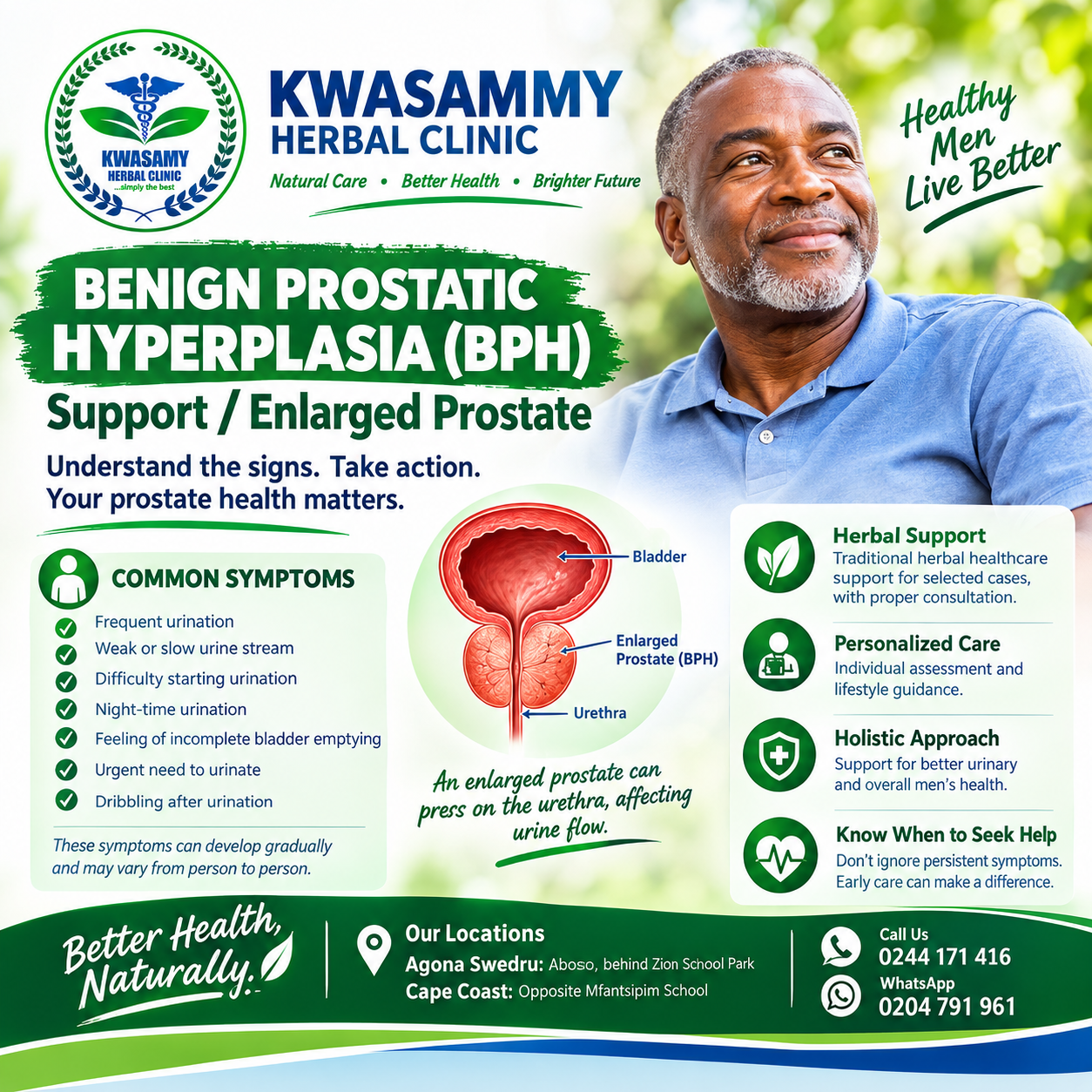
Benign Prostatic Hyperplasia (BPH): Symptoms, Causes and Support for an Enlarged Prostate
 Admin@Kwasammy
Benign Prostatic Hyperplasia (BPH), commonly known as an enlarged prostate, is a common condition that can affect men as they get older. Although an enlarged prostate is not prostate cancer, it can put pressure on the urethra and interfere with normal urine flow, leading to bothersome urinary symptoms.
At Kwasammy Herbal Clinic, we provide consultation and healthcare support for selected men experiencing prostate-related and urinary symptoms. Proper assessment is important because urinary symptoms can have several possible causes and should not automatically be assumed to be BPH.
What Is Benign Prostatic Hyperplasia (BPH)?
The prostate is a small gland located below the bladder and surrounding part of the urethra. As some men age, prostate tissue can gradually increase in size. This non-cancerous enlargement is known as benign prostatic hyperplasia (BPH).
As the prostate becomes larger, it may press against the urethra and affect the normal flow of urine. This can cause changes in how often a man urinates, how strongly urine flows and how completely the bladder empties.
BPH is particularly common in older men, and the likelihood of experiencing BPH symptoms increases with age.
Common Symptoms of an Enlarged Prostate
BPH symptoms often develop gradually. Some men may experience only mild symptoms, while others may experience symptoms that interfere significantly with sleep and daily activities.
Common symptoms include:
- Difficulty starting urination
- Weak or slow urine stream
- Urine flow that starts and stops
- Feeling that the bladder has not emptied completely
- Frequent urination
- A sudden or urgent need to urinate
- Getting up several times at night to urinate
- Dribbling after urination
- Straining or pushing to urinate
These symptoms are commonly associated with lower urinary tract symptoms (LUTS), which can occur alongside BPH.
What Causes BPH?
The exact cause of BPH is not completely understood. However, ageing and changes in male hormone levels are thought to play important roles. Family history and certain health and lifestyle factors may also influence the likelihood of developing BPH.
BPH is not the same as prostate cancer. An enlarged prostate itself is a benign, non-cancerous condition. However, urinary symptoms should still be assessed because similar symptoms can occur with other prostate or urinary conditions, including prostate cancer.
Who Is More Likely to Develop BPH?
BPH becomes increasingly common with age, particularly among men over 50. Men with a family history of prostate enlargement may also have a higher likelihood of developing the condition.
If you are experiencing changes in your urinary habits, particularly as you get older, don’t ignore them simply because they seem mild.
How Is BPH Diagnosed?
Urinary symptoms alone cannot confirm that you have BPH. A healthcare professional may assess your symptoms and medical history and may perform a physical examination.
Depending on the situation, evaluation may include:
- Review of urinary symptoms
- Medical and family history
- Physical examination
- Prostate examination
- Urine tests
- Blood tests
- Assessment of bladder function
- Ultrasound or other investigations when appropriate
The exact tests required depend on the individual’s symptoms and clinical circumstances.
Proper assessment is important because urinary difficulties can result from several different conditions.
BPH Support at Kwasammy Herbal Clinic
At Kwasammy Herbal Clinic, we provide consultation and healthcare support for men experiencing selected prostate and urinary health concerns, including Benign Prostatic Hyperplasia (BPH) / enlarged prostate.
Our approach emphasizes:
- Individual health consultation
- Assessment of reported symptoms
- Responsible herbal healthcare support
- Lifestyle and wellness guidance
- Appropriate referral when further medical evaluation is required
Talk to Kwasammy Herbal Clinic
If you are experiencing symptoms associated with an enlarged prostate, don’t suffer in silence.
Kwasammy Herbal Clinic provides consultation and healthcare support for selected prostate-related concerns.
Our Locations
Agona Swedru:
Aboso, behind Zion School Park
Cape Coast:
Opposite Mfantsipim School
Call: 0244 171 416
WhatsApp: 0204 791 961